
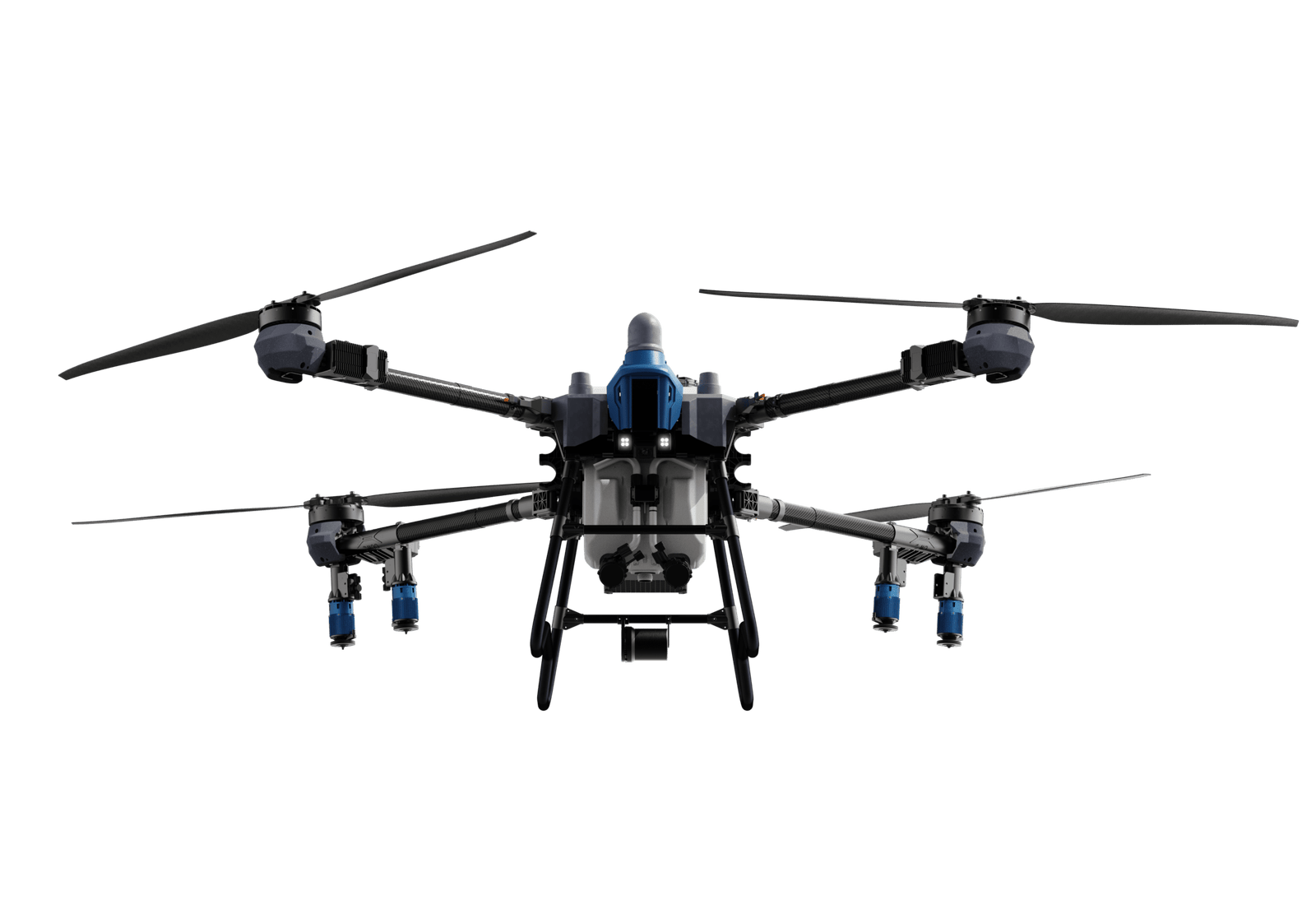
AG Drones helps agricultural producers apply crop protection products, nutrients, approved pesticides, and granular materials with precision while reducing soil compaction and improving access to challenging fields.
From targeted spraying to crop-health mapping, we combine drone technology with aerial application knowledge to help growers make timely, informed decisions across the Okanagan Valley and Southern Interior BC.
Get full coverage and deep penetration.
Get to the root of the issue.
When your fields need foliar nutrition, canopy sprays, or targeted crop protection, our team ensures the right material reaches the right place at the right rate.
AG Drones provides professional agricultural drone spraying services throughout the Okanagan Valley and the Southern Interior, British Columbia. We help growers improve crop health, increase operational efficiency, and reduce the challenges associated with traditional ground-based spraying equipment.
Agricultural drones deliver precise applications of fungicides, herbicides, insecticides, foliar nutrients, biological products, and fertilizers across vineyards, orchards, hay fields, ranchlands, and specialty crops.
By combining innovative drone technology with proven agronomic practices, we help producers protect yields while minimizing product waste, soil compaction, and environmental impact.
Crew is certified for RPAS Advanced Operations by the Ministry of Transportation and by the Ministry of Environment and Climate Change Strategy for Aerial Pesticide Application in compliance with federal and provincial regulations.
The first parts of a good IPM program are evaluation and identification. Through aerial mapping and soil sample analysis we can recommend a pro-active course of action, assisting producers to build a nutrient and crop protection program tailored to plant requirements and environmental safety.
Apply crop protection products and treatments accurately across orchards, vineyards, fields and challenging terrain.
Distribute fertilizer, humic, and other granular products efficiently, including areas where ground equipment struggles.
Support targeted seeding projects with flexible aerial application and reduced ground disturbance.
Tell us what you are growing, where the challenge is, and what outcome you need.
We review field conditions, access, terrain, timing, product labels and data sheets.
Our team carries out the planned spraying, spreading, or mapping work with care and efficacy in mind.
We can gather in-field and aerial map data to help identify next steps where appropriate.
Uncommon operations require unique solutions. We might be able to help.
* Standard rates cover most operations with average application flow rates. Applications that require extra product or crops with extremely dense canopies may be subject to addition cost.

Effective delivery of foliar nutrients, micro-nutrients, and growth stimulants.
Only PMRA certified Aerial inputs permitted. Ask us!
Broadcast seed and nutrients without harming soil or growth.
Get discounted rates for scheduled applications of crop protections and fertilities.
Have questions about drones in agriculture? Here are the most common questions.
• The person who mixes and loads the pesticide is different from the RPA pilot.
• Mixers and loaders wear the minimum personal protective equipment (PPE) required on the label.
• The RPA pilot, the visual observer, and workers handling the RPA during application must follow the PPE and mitigation measures for ground application (either ground boom or air blast) to the crop.
An RPAS Pilot Certificate – Advanced Operations from Transport Canada is needed to start. We offer intensive classes and review from 43 North to get you in the air asap.
Training on heavy lift agriculture drones is highly recommended to ensure safety and efficiency in operations. Ask Us!
Have questions, need a quote, or custom application solution? Our team is ready to help you.
(888) 818-7014
info@agdronesinc.ca
Monday - Friday : 8:30AM - 5:00PM PST
In the Okanagan? Give us a call. We are available Monday thru Friday 9AM to 4:30PM PST
Whether you are interested in purchasing an ag drone system, need ag products or are looking for a full service provider.
Give us a call or message to get started.

How can we help you grow?
© 2026 AG Drones Inc. All rights reserved. No duplication of content or imagery permitted.